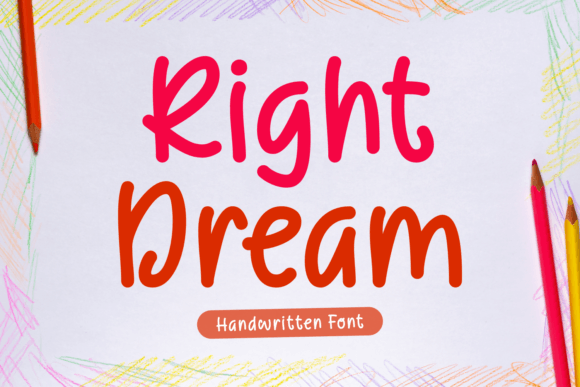
Right Dream: A Playful Handwritten Font for Modern Creative Projects
In today's design landscape, authenticity and personality are more valued than ever. As brands and creators strive to connect with audiences on a more personal level, typography plays a crucial role in conveying tone and emotion. Right Dream stands out as a delicate yet expressive handwritten font that brings a sense of warmth, creativity, and charm to any visual project. Its thin, fluid letterforms mimic the intimacy of personal handwriting, making it a go-to choice for designers looking to add a human touch to their work.
The Rise of Personalized Typography
In recent years, there has been a clear shift away from overly polished, sterile designs toward more organic, handcrafted aesthetics. This change reflects evolving consumer expectations and a growing preference for brands that feel approachable and genuine. Handwritten fonts like Right Dream have become increasingly popular in branding, packaging, and digital content because they evoke a sense of individuality and emotional connection.
Whether it's a boutique coffee shop's logo, a wedding invitation, or a social media post for a creative business, the use of a font that feels hand-drawn can make a design feel more relatable and less corporate. This trend aligns with broader changes in digital communication, where authenticity and storytelling are key drivers of engagement.
Why Right Dream Fits Modern Design Needs
Right Dream is not just another handwritten font—it's designed with a balance of elegance and playfulness that makes it versatile across different mediums. Its delicate strokes and slightly irregular structure give it a natural, human feel without sacrificing readability. This makes it ideal for a wide range of applications:
- Wedding and event invitations
- Product packaging for artisanal or handmade brands
- Logo design for creative businesses and startups
- Social media graphics and digital illustrations
- Personal blogs, greeting cards, and stationery
Unlike bolder script fonts that can feel overly ornate or difficult to read at smaller sizes, Right Dream maintains clarity while still conveying a sense of whimsy. It’s particularly effective when used in combination with clean sans-serif fonts, allowing for a balanced and modern typographic hierarchy.
Practical Applications Across Industries
For entrepreneurs and small business owners, typography is often a key component of brand identity. A font like Right Dream can help establish a brand voice that feels friendly, creative, and approachable—especially for businesses in lifestyle, wellness, education, or creative services.
Consider a local bakery that wants to launch a new line of custom cookies. Using Right Dream on product packaging and social media posts can reinforce a handmade, artisanal image. Similarly, a freelance illustrator might incorporate the font into their logo and portfolio website to emphasize creativity and personal expression.
In the world of digital marketing, visual content is more important than ever. Fonts that stand out in a sea of generic templates can help content creators differentiate themselves. Whether used in Instagram stories, Pinterest graphics, or email newsletters, Right Dream adds a touch of personality that resonates with audiences seeking authenticity.
Designing with Right Dream: Tips and Best Practices
While Right Dream is highly expressive, it works best when used thoughtfully. Here are a few practical tips for incorporating it into your next design:
- Use it for short text – Due to its delicate nature, it’s best suited for headlines, titles, and short phrases rather than long paragraphs.
- Pair with clean, modern fonts – Combining Right Dream with a minimalist sans-serif creates contrast and keeps the design from feeling too busy.
- Adjust spacing for readability – Kerning and letter spacing can significantly affect legibility, especially at smaller sizes.
- Consider color and background – Light or neutral backgrounds tend to complement its soft appearance, though it can also stand out beautifully against textured or pastel backgrounds.
Designers should also consider the format in which the font will be used. For digital applications, ensure that the font is web-safe or embedded properly to maintain consistency across devices. For print, test the font at different sizes to ensure clarity and visual impact.
The Emotional Impact of Typography
Typography is more than just a design element—it’s a communication tool. The way text is presented can influence how a message is perceived. Fonts like Right Dream carry emotional weight, often evoking feelings of nostalgia, playfulness, and sincerity. This emotional resonance is especially valuable in industries where trust and connection are key, such as education, therapy, and personal development.
For instance, an online course aimed at helping people rediscover creativity might use Right Dream in promotional materials to signal a gentle, encouraging tone. Similarly, a children's book illustrator might use the font in chapter titles or character dialogue to enhance the story's charm and warmth.
Looking Ahead: The Future of Expressive Fonts
As design continues to evolve, the demand for expressive, personality-driven typography is unlikely to fade. In fact, with the rise of AI-generated content and automated design tools, the need for human-centered, handcrafted elements like Right Dream may become even more pronounced. Designers and brands are increasingly seeking ways to stand out in a crowded digital space, and thoughtful typography is one of the most effective tools available.
Moreover, as remote work and digital communication become more ingrained in daily life, people are craving more warmth and connection in the content they consume. Handwritten fonts offer a way to bridge the gap between digital efficiency and emotional depth, making them a valuable asset for both personal and professional projects.