King Heksa: A Unique Handwritten Sans Serif Font for Versatile Design Projects
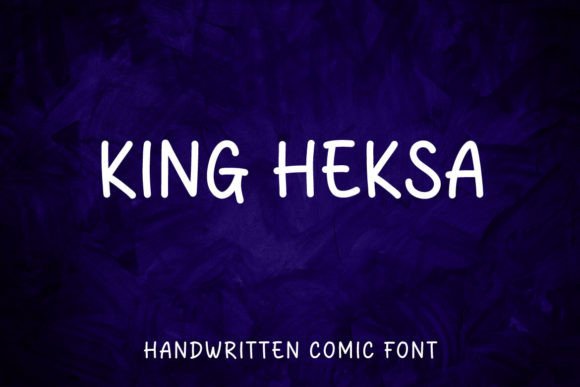
When it comes to typography, the choice of font can significantly influence how a message is received. King Heksa stands out in the world of handwritten sans serif fonts due to its clean, approachable aesthetic and remarkable adaptability. Unlike traditional script fonts that often lean heavily into formal or cursive styles, King Heksa offers a modern, casual look that mimics natural handwriting without sacrificing legibility or structure.
This font is particularly appealing to designers who want to inject personality into their work without veering into overly stylized territory. Its balanced proportions and open spacing make it readable even at smaller sizes, which is a key advantage when working across multiple formats—from digital content to print media.
What Sets King Heksa Apart from Other Handwritten Fonts?
While many handwritten fonts aim for authenticity by mimicking real pen strokes, King Heksa takes a slightly different approach. It blends the organic feel of handwriting with the clarity of sans serif design, resulting in a typeface that feels both personal and professional. This hybrid quality makes it more versatile than many of its peers, especially in contexts where legibility and tone must coexist.
One of the defining characteristics of King Heksa is its lack of serifs combined with a slight irregularity in letterforms, which gives it a hand-drawn charm. This subtle imperfection helps it avoid the sterile look often associated with overly polished digital fonts, making it ideal for creative and expressive applications.
Where King Heksa Excels: Use Cases and Practical Applications
- Comic Books: The font’s casual tone and high readability make it a solid choice for dialogue and narration in comics, especially those with a lighthearted or character-driven tone.
- Posters and Flyers: King Heksa’s informal aesthetic works well in promotional materials where a friendly, approachable vibe is desired, such as event posters or local business flyers.
- Book Titles: Whether for self-published works or children’s books, this font can add a personal touch to cover designs without overwhelming the visual space.
- Social Media Content: For influencers or brands that want to maintain a handcrafted, authentic look in their graphics, King Heksa offers a visually engaging alternative to standard system fonts.
Its adaptability also makes it suitable for educational materials, especially those aimed at younger audiences or informal learning environments. In these cases, the font’s readability and friendly appearance can help reduce visual fatigue and encourage engagement.
Comparing King Heksa to Similar Font Styles
When evaluating handwritten sans serif fonts, it's important to consider how King Heksa stacks up against other styles and categories. For example, many script fonts lean heavily into elegance and formality, which can be limiting in casual or modern contexts. On the other hand, purely geometric sans serifs often lack the warmth and personality that King Heksa provides.
Compared to all-caps or stencil-style handwritten fonts, King Heksa maintains a more natural reading rhythm due to its lowercase variation and word shape recognition. This makes it a better fit for longer blocks of text or content where readability is a priority.
That said, King Heksa may not be the best choice for projects requiring a highly formal or technical tone. In branding or editorial design where a more structured or authoritative presence is needed, designers may opt for more traditional sans serif or serif fonts instead.
Strengths and Limitations of King Heksa
One of the major strengths of King Heksa is its versatility across different media. Whether used in print or digital design, the font maintains a consistent visual identity that’s both distinctive and functional. Additionally, its relatively neutral tone allows it to blend well with a variety of color schemes and design elements without overpowering the composition.
However, like any font, it has its limitations. Because of its informal appearance, King Heksa may not be appropriate for legal documents, academic papers, or corporate branding that demands a more serious or conventional typographic style. It also lacks some of the extended character sets and language support found in more universally designed fonts, which could be a consideration for multilingual projects.
When to Choose King Heksa—and When to Look Elsewhere
If you're working on a project that benefits from a warm, approachable tone and requires a font that feels both modern and personal, King Heksa is worth considering. It performs particularly well in creative industries such as illustration, children’s media, lifestyle branding, and social media marketing, where a sense of authenticity and relatability is key.
Conversely, if your design needs to convey authority, precision, or formality, it may be better to explore other font families that are more structurally rigid or stylistically neutral. For example, in financial reports or technical documentation, a more conventional sans serif like Arial or Helvetica might be more appropriate.
Making an Informed Typography Decision
Choosing the right font is more than just a stylistic choice—it’s a strategic decision that affects how your audience perceives your message. King Heksa offers a compelling option for designers seeking a handwritten sans serif that balances personality with practicality. However, it’s important to consider the broader design context, including audience expectations, medium, and overall brand tone.
Before finalizing your font choice, test King Heksa in different sizes and settings to ensure it maintains clarity and visual harmony. Pair it with complementary fonts for headings or body text to create a cohesive typographic system. And don’t hesitate to explore alternative options if the project calls for a more formal or stylized approach.
In the end, the best font for your project is the one that aligns with your goals, supports your message, and resonates with your audience. King Heksa may not be the answer in every case, but for many creative and expressive applications, it’s a strong contender that deserves a place in your typographic toolkit.